The holidays typically bring snowy backdrops, festive lights and family gatherings. This year, however, they’re also expected to bring price hikes to gifts, decorations and trees as the full brunt of the Trump administration’s tariff policy catches up to Christmas. U.S. consumers would have spent an additional $132 each on holiday gifts last year if Trump’s tariffs had been in place, according to a LendingTree analysis. The biggest burden would have been placed on consumer electronics, with per-shopper increases of $186, followed by clothing and accessories at $82.
“For most Americans, spending an extra $132 at the holidays is significant,” said Matt Schulz, LendingTree’s chief consumer finance analyst, in a statement. “It could prompt people to cut back on gift-giving this year or lead to them taking on extra debt.”
Consumers are also expected to spend heavily on non-gift holiday items. Shoppers will likely shell out roughly $262 on seasonal purchases like decorations and greeting cards, according to a recent survey from the National Retail Federation in which 85 percent of respondents said they anticipate higher costs this year due to tariffs.
Price hikes come to Christmas trees
What’s Christmas without a tree? With prices rising, some Americans might find out. Artificial Christmas trees, the bulk of which are imported from China, are expected to cost 10 to 15 percent more this year, according to the American Christmas Tree Association (ACTA). Manufacturers are both absorbing and passing on tariff costs, which currently average at 47.5 percent for Chinese imports.
China is also the primary source of America’s holiday décor, providing 88 percent of Christmas decoration products in 2023, according to U.S. Census data. That means even those choosing farm-grown Christmas trees will face higher prices on items like lights, some of which are now subject to tariffs as high as 67 percent, the ACTA noted.
“Christmas tree and decor suppliers and retailers have done all they can to manage the unpredictability and roller-coaster ride of the tariff landscape,” Jami Warner, executive director of the ACTA, told Observer via email. “To protect the consumer, they have absorbed as much of the tariffs as possible, but many have had to pass on some of these unanticipated costs.”
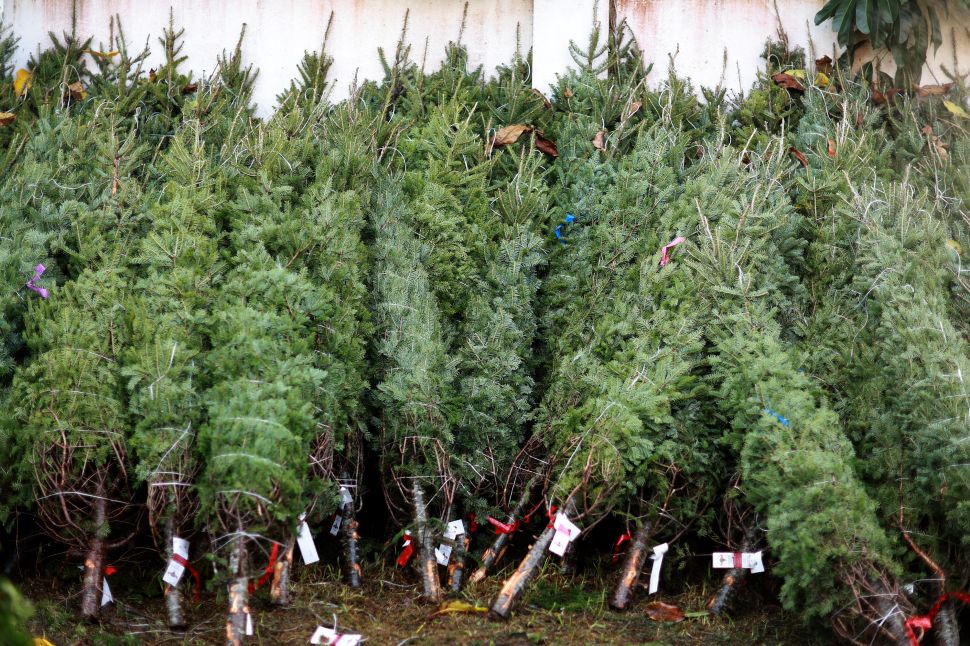
Real Christmas trees, most of which are grown domestically, remain a rare bright spot. Roughly 84 percent of wholesale growers don’t plan on raising prices this year, according to a survey from the Real Christmas Tree Board, which found many producers are absorbing price pressures themselves. And although a small share of trees are imported from Canada, those imports are exempt from tariffs under the USMCA because they are classified as an agricultural commodity.
While the holidays may get more expensive, they won’t be derailed. Consumers are still expected to spend heavily on gifts: retail sales in November and December could top $1 trillion for the first time, according to the National Retail Federation.
“I doubt that we’ll see a huge drop-off in the amount of electronics and clothes that are gifted this year, simply because they’re what so many people want,” said Schulz, who added that tariff-fueled hikes could lead to families “having to suck up the higher costs” in order to purchase desired gifts for their loved ones.
Artificial trees also show no signs of losing ground. They remain the preferred choice for four out of every five U.S. families who celebrate Christmas, the ACTA noted. “It might cost a bit more and inventory might be a bit thinner this season, but there’s a perfect Christmas tree out there for everyone,” said Warner.